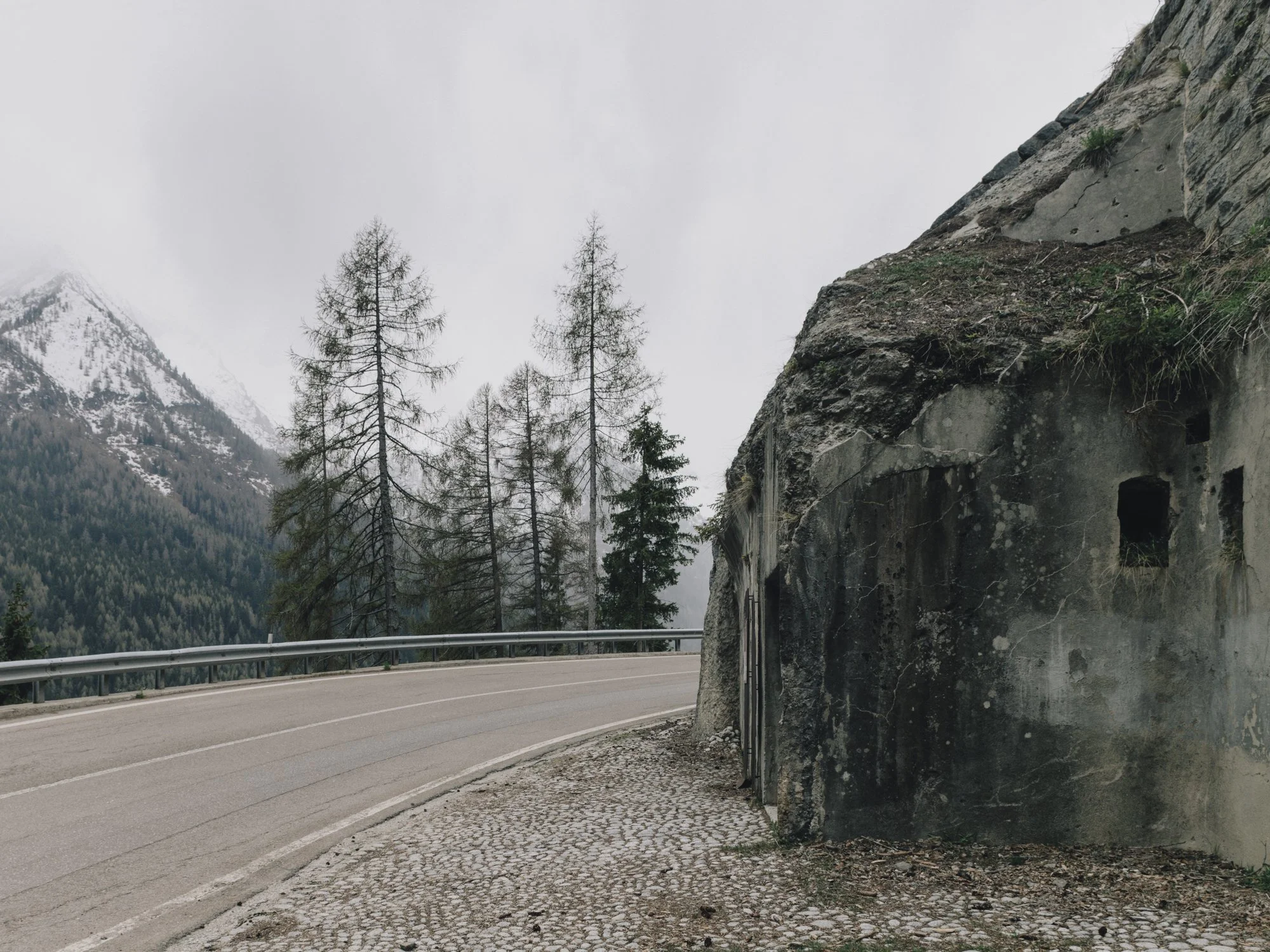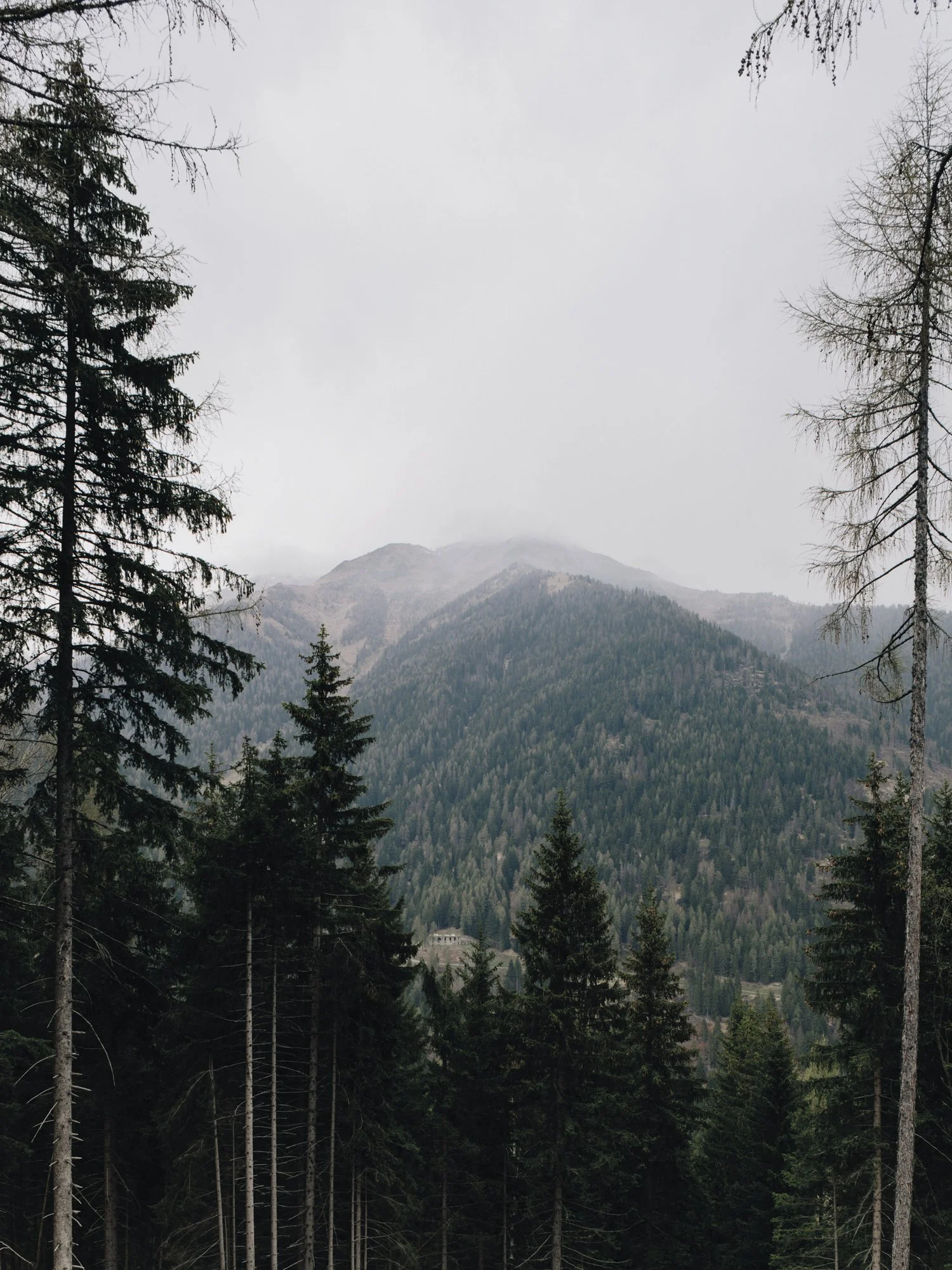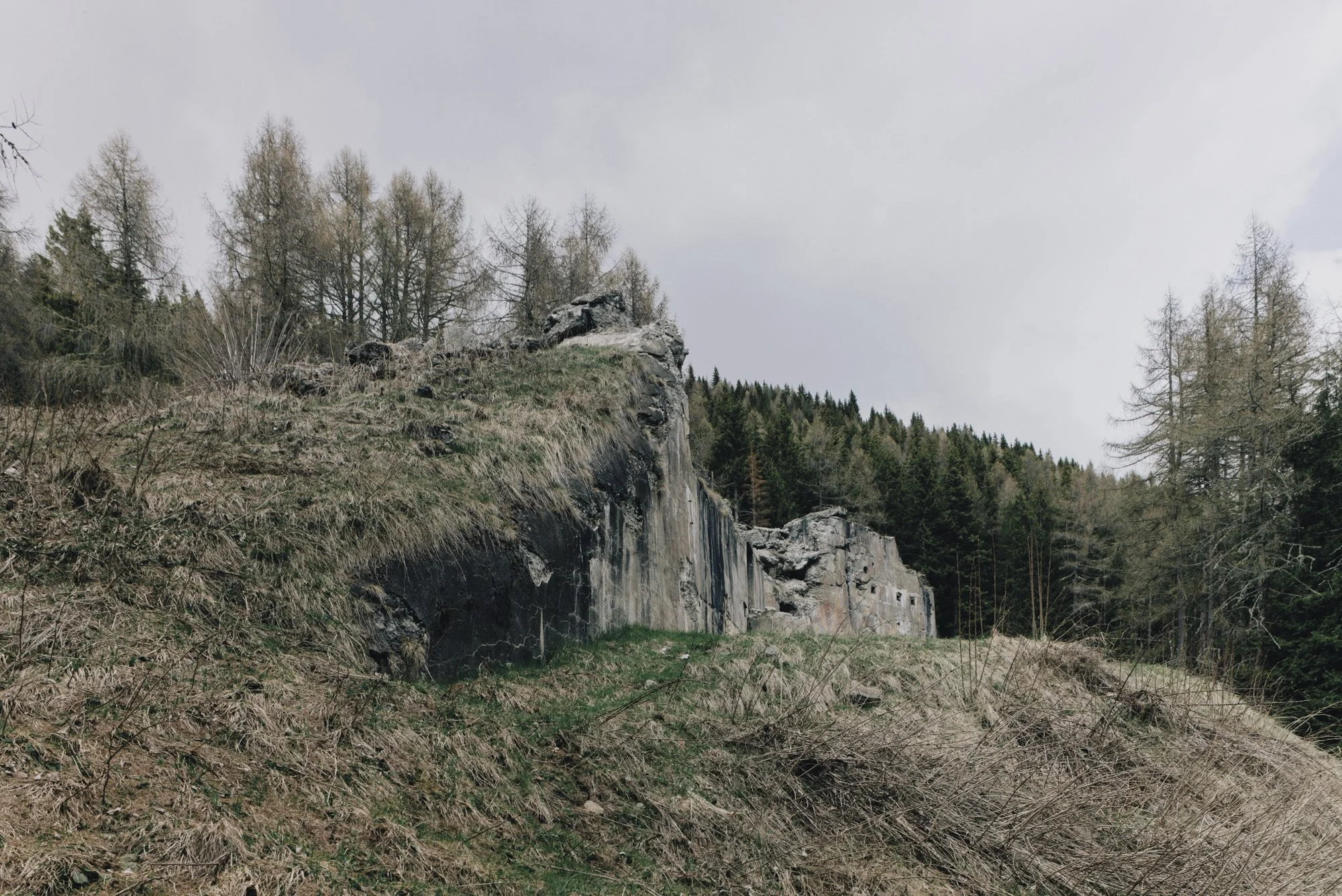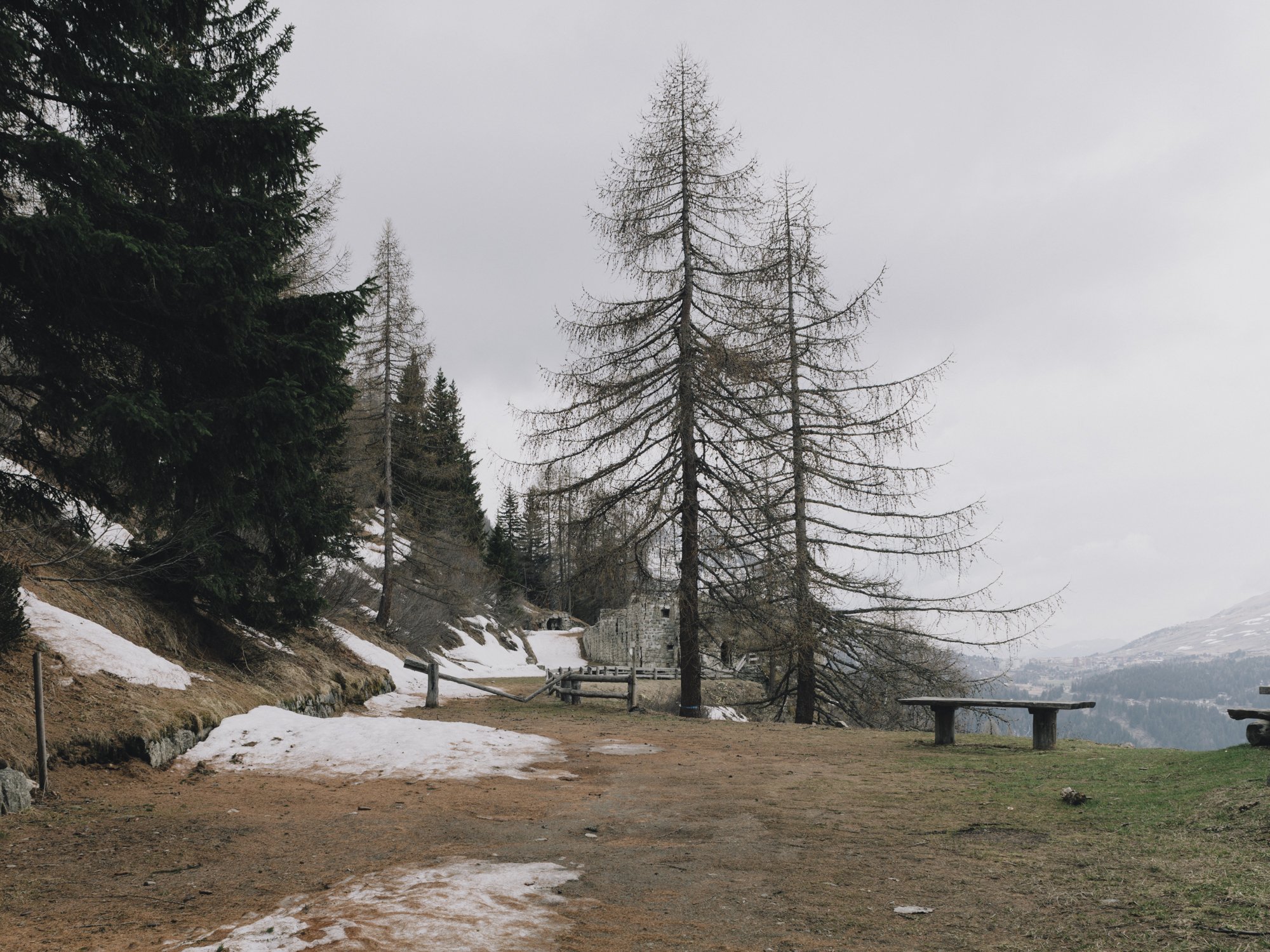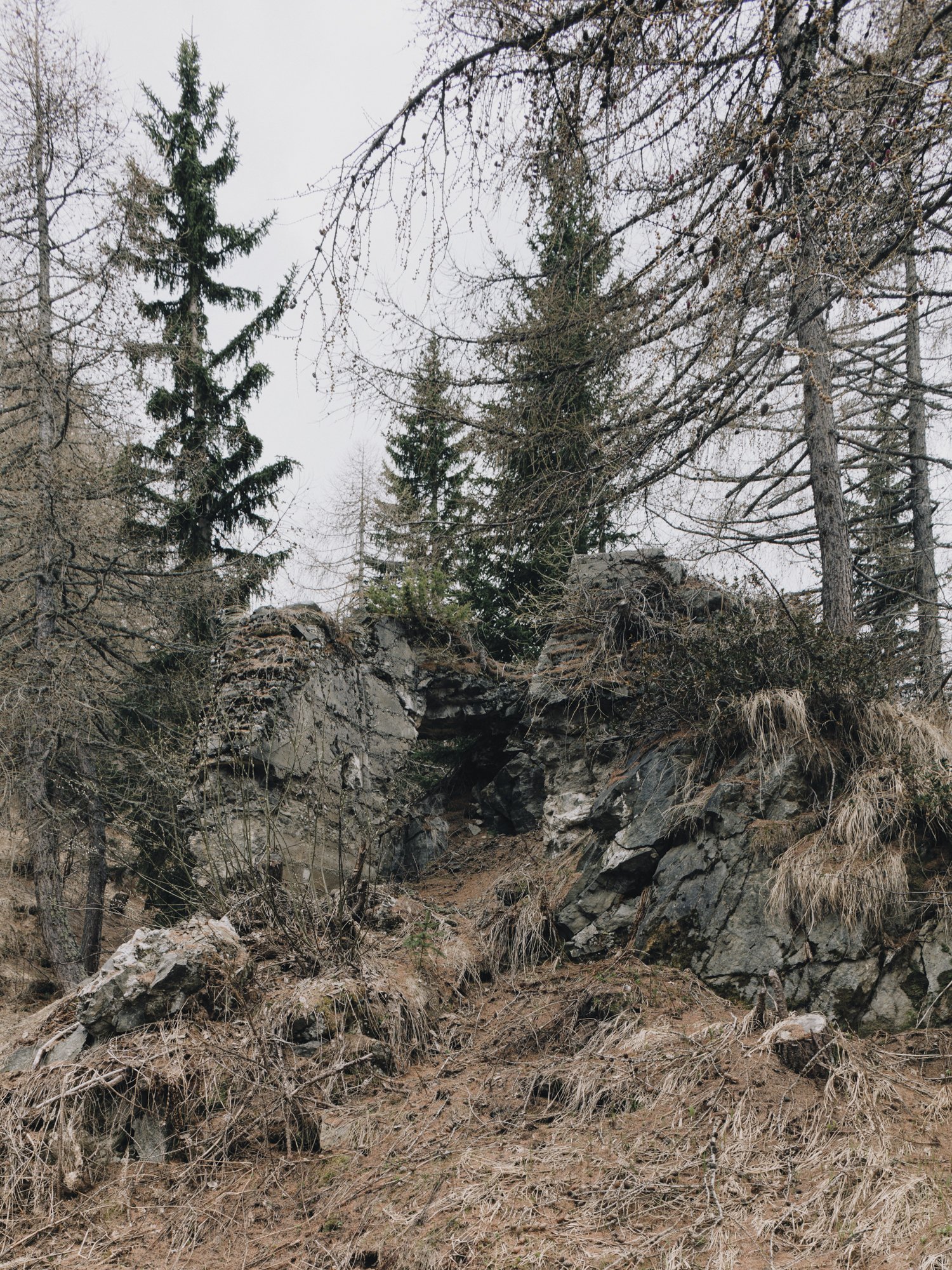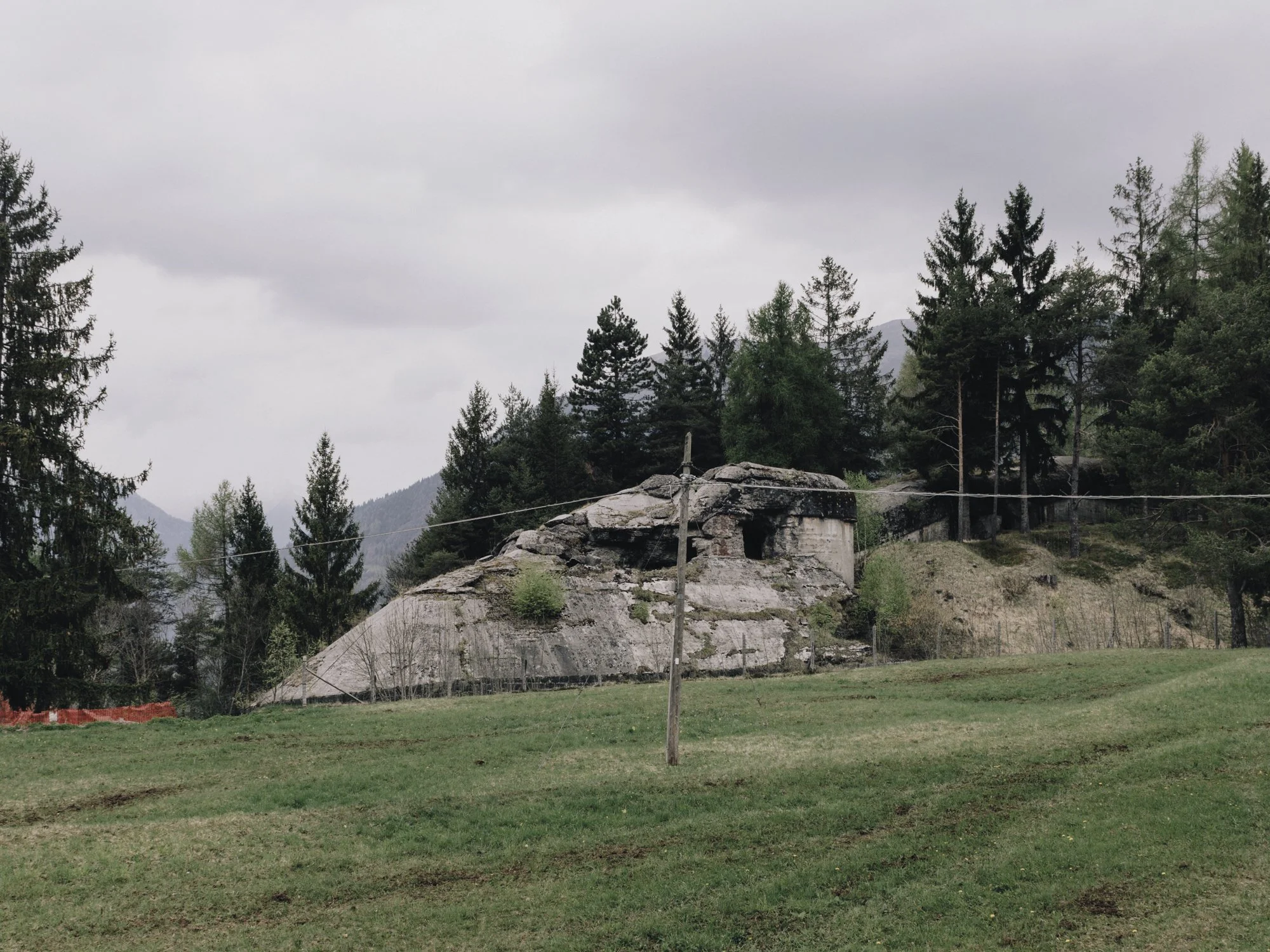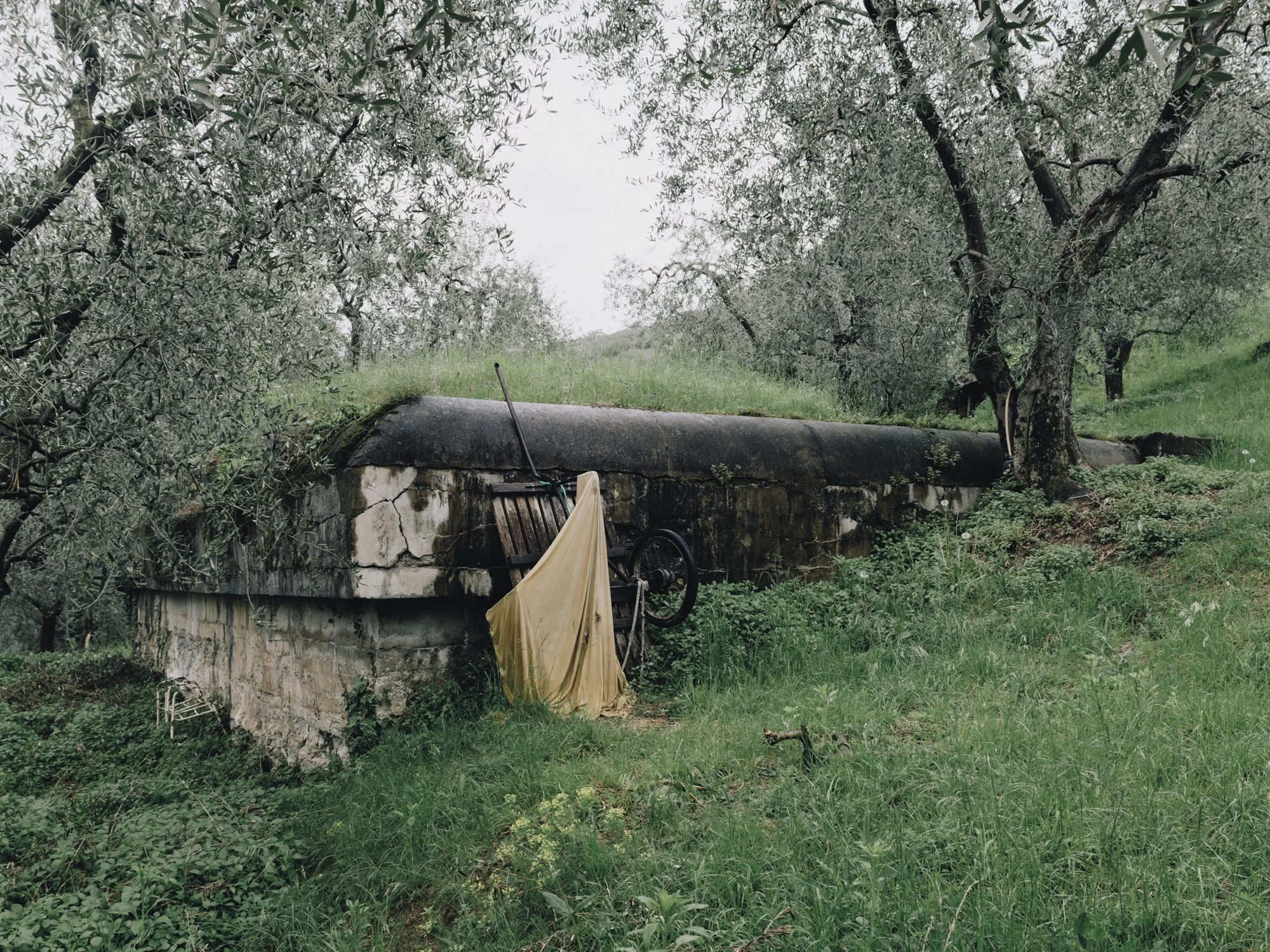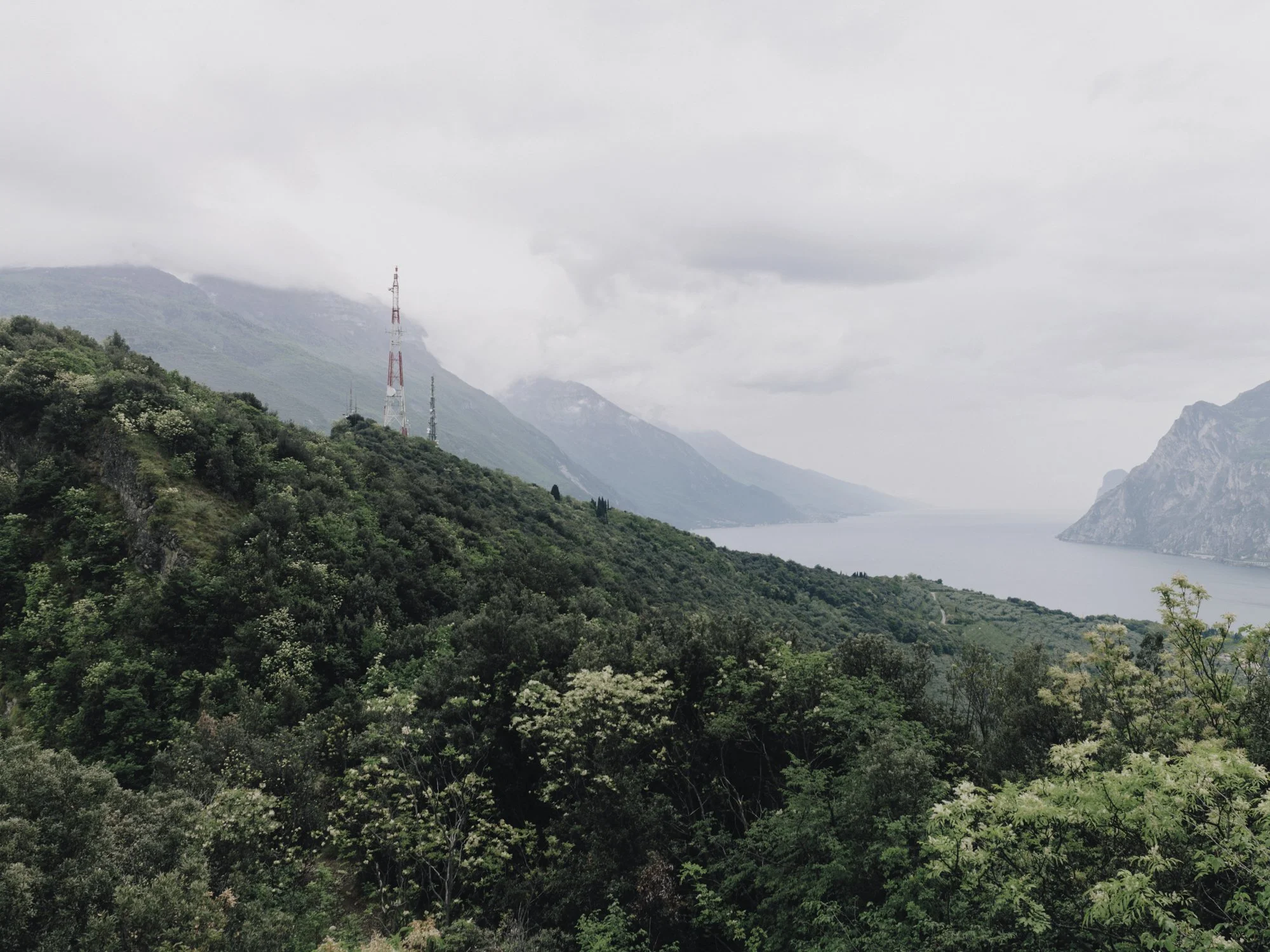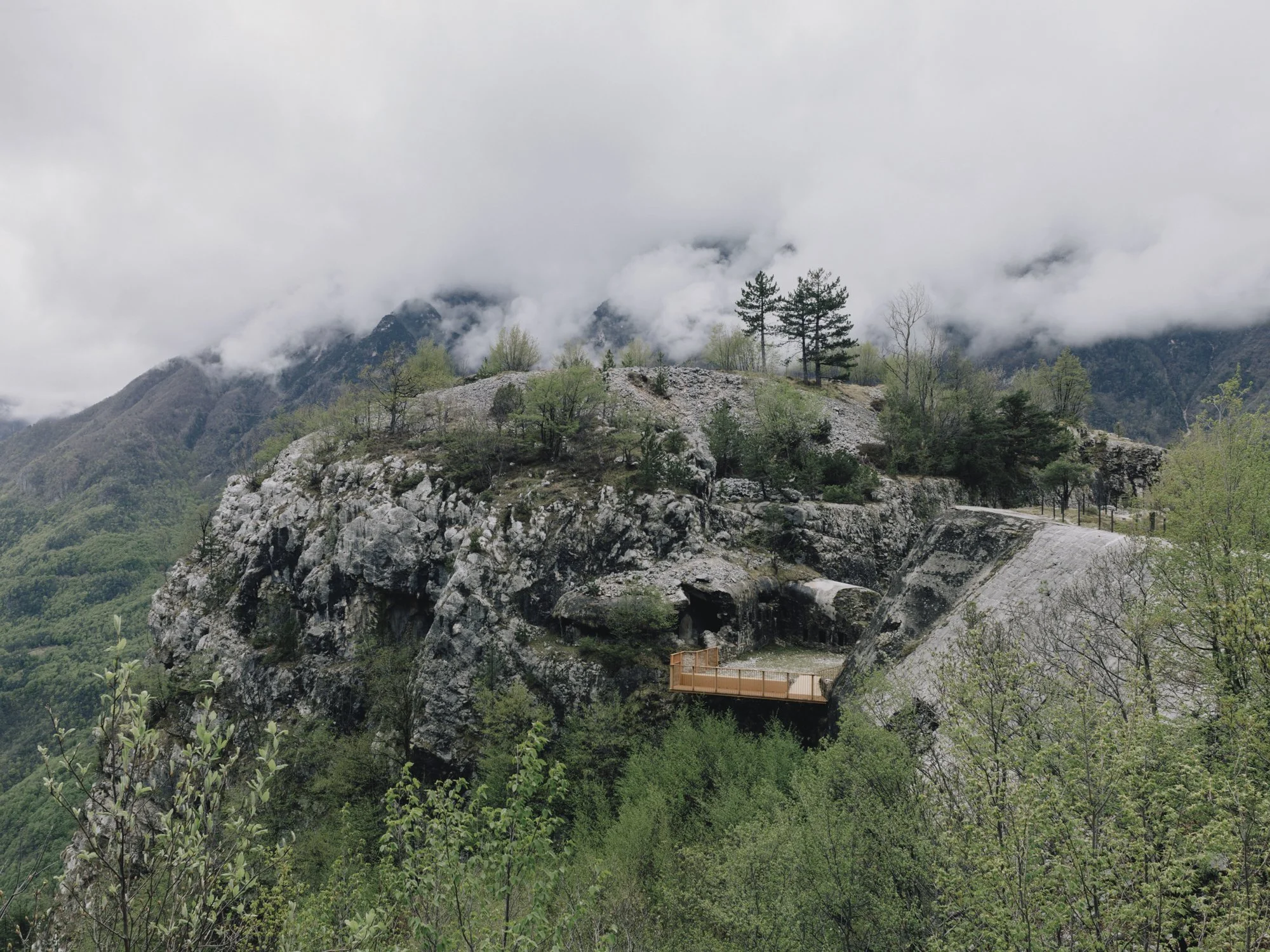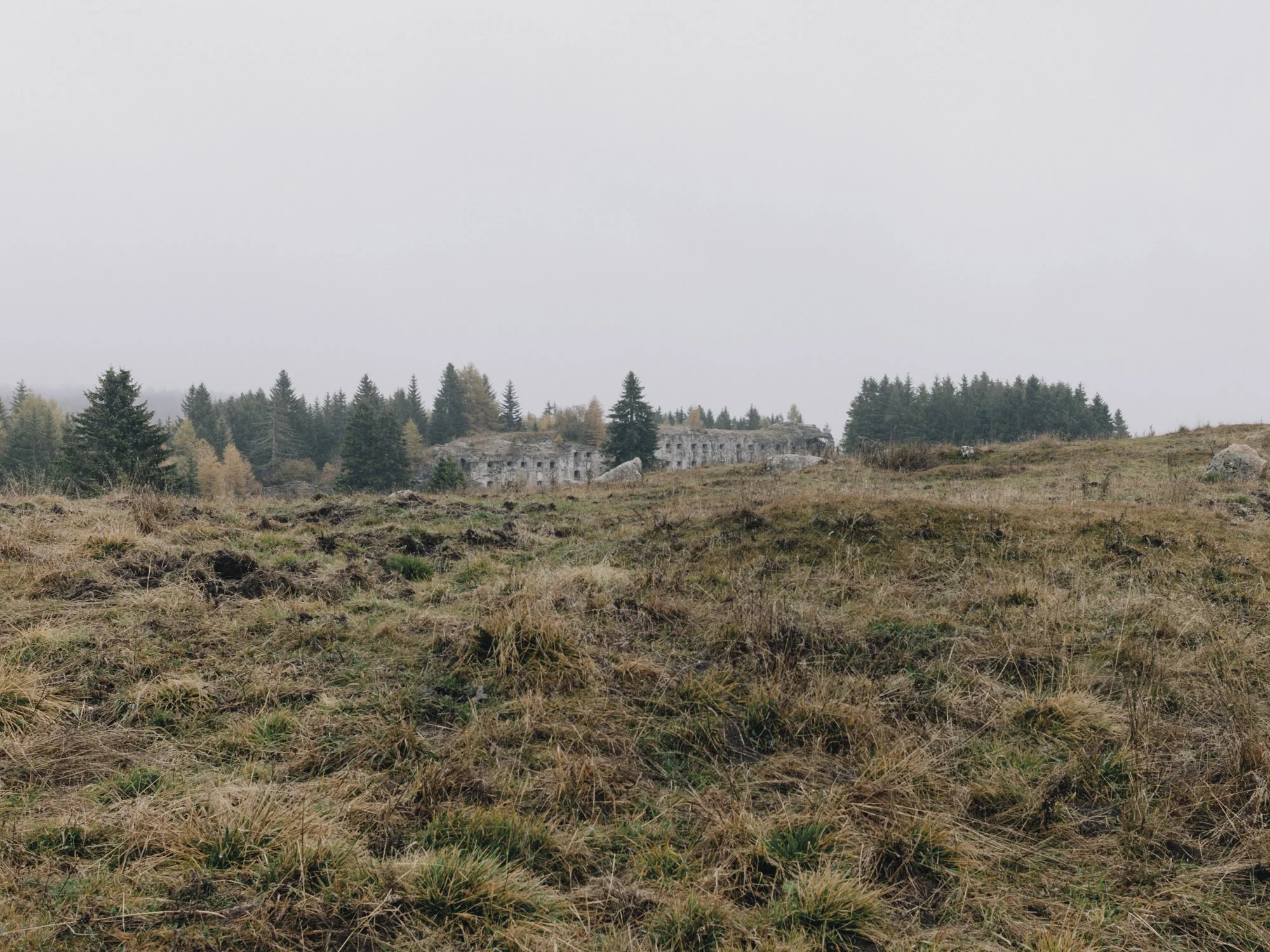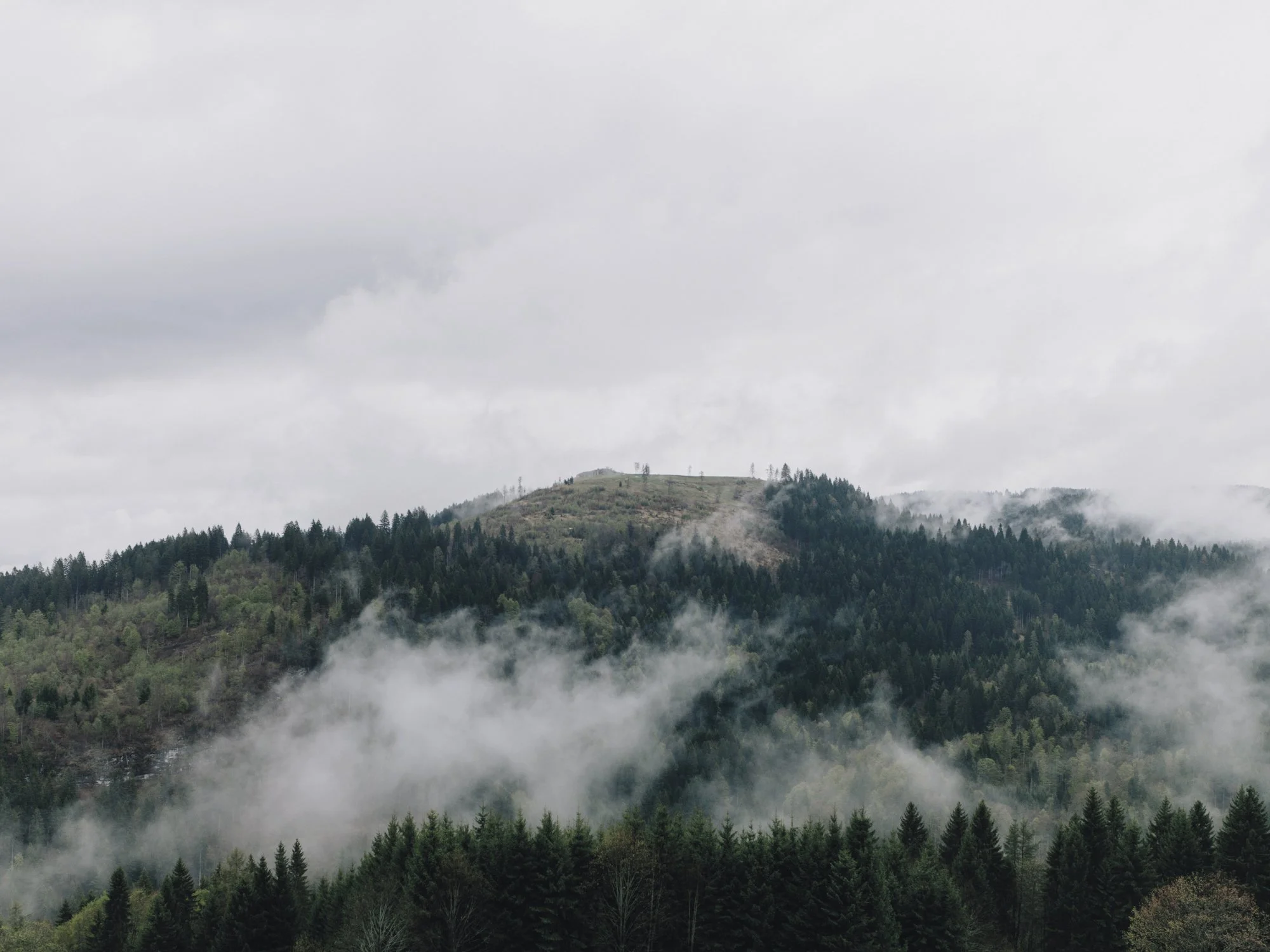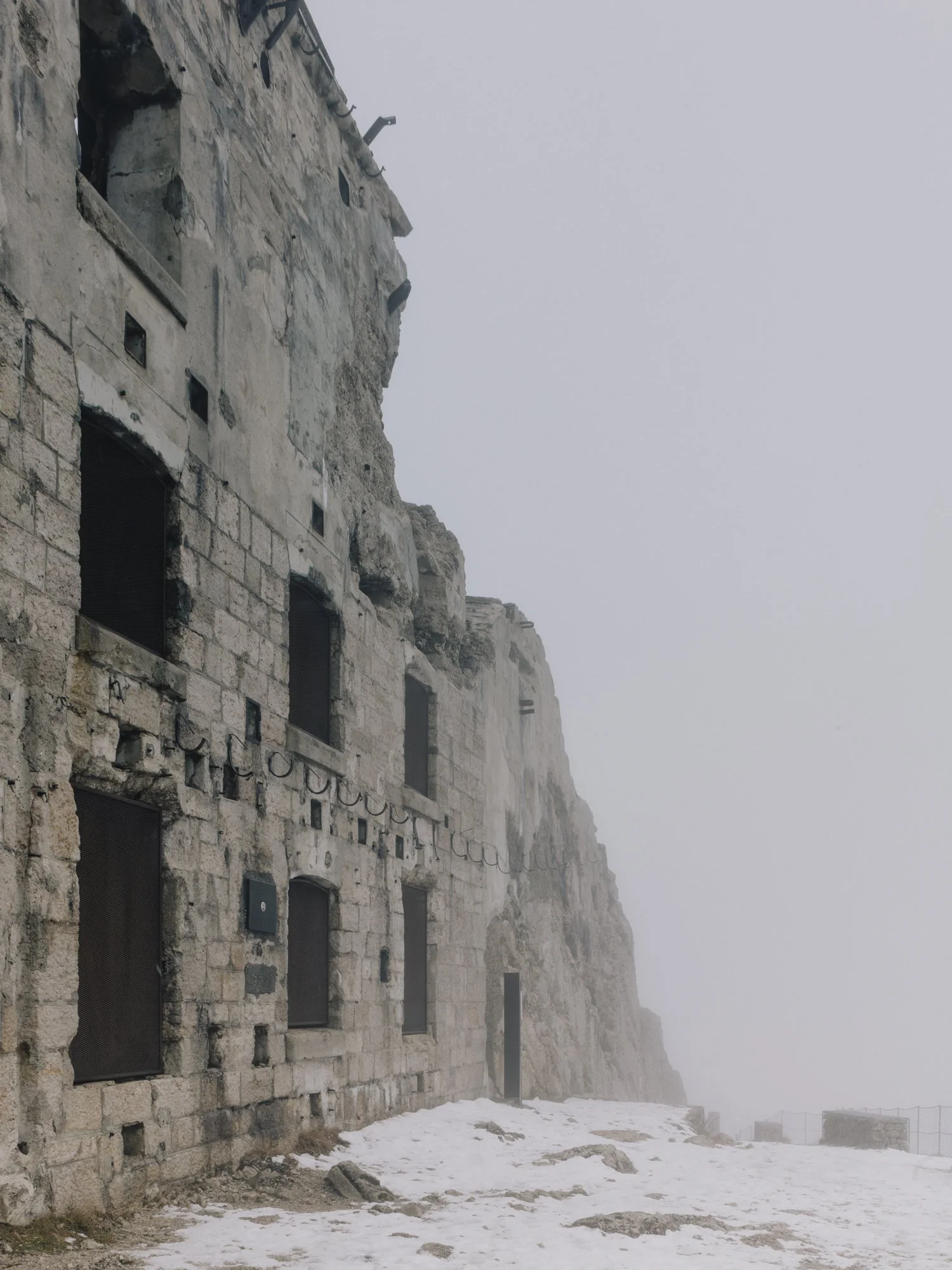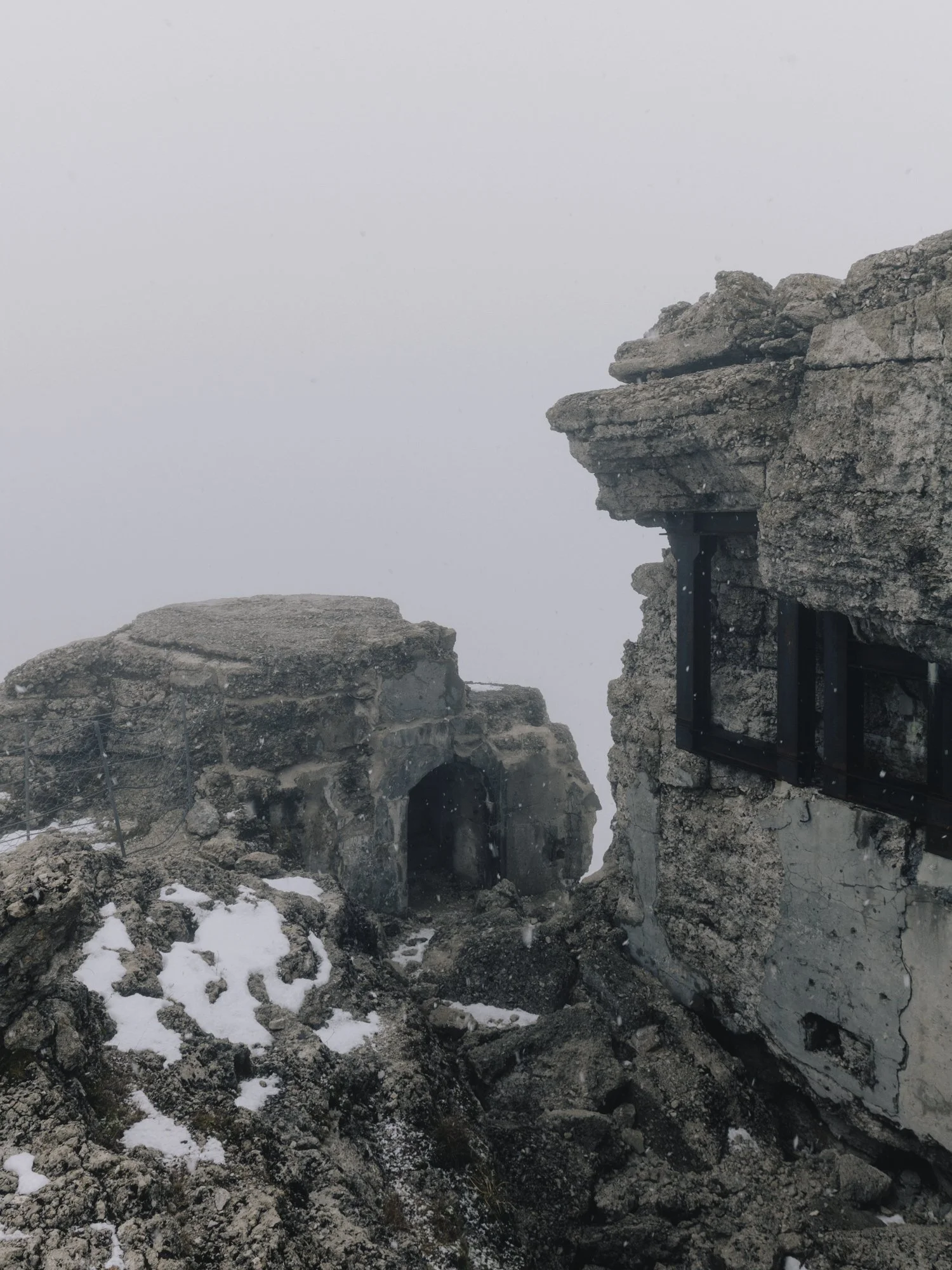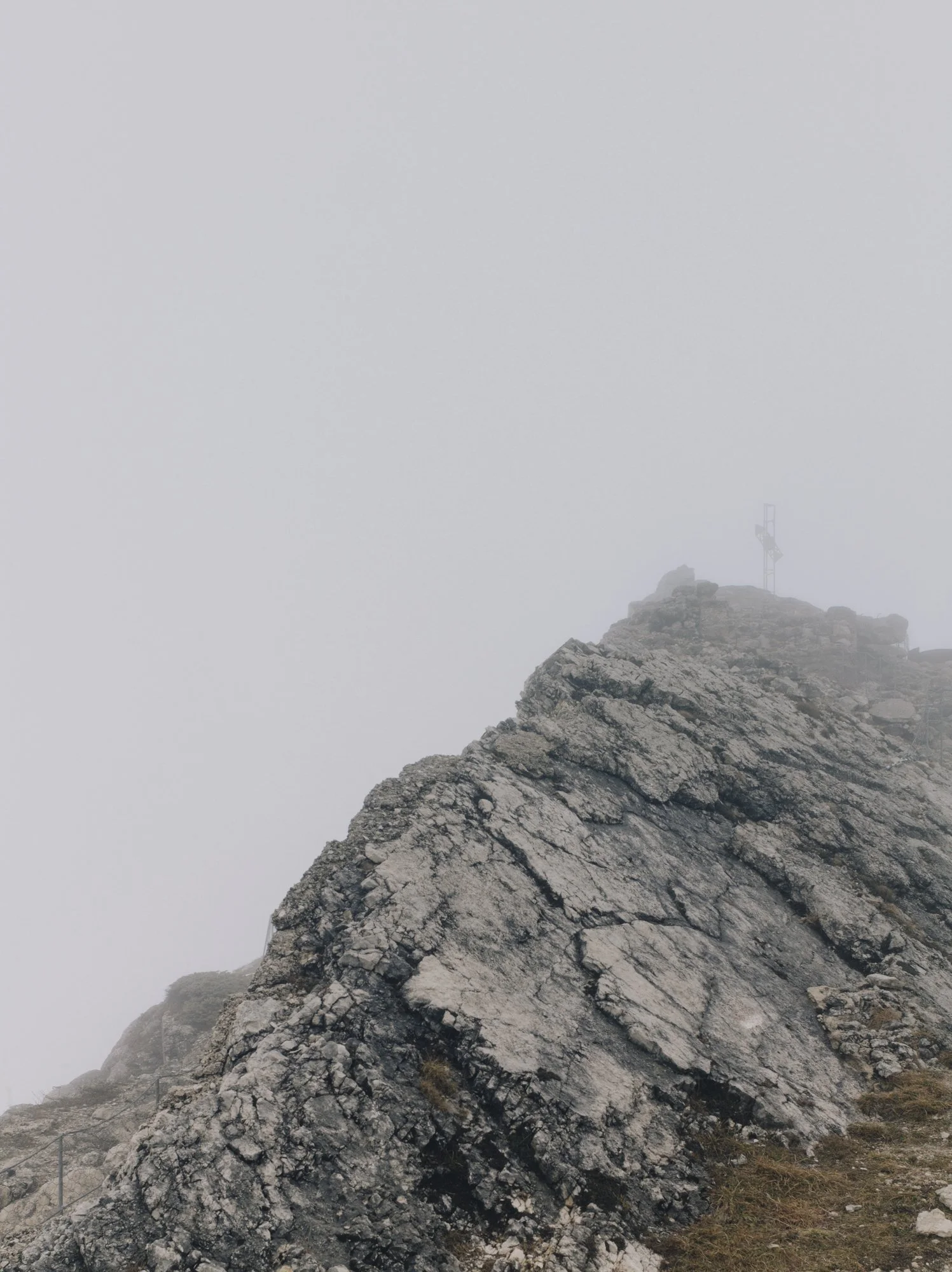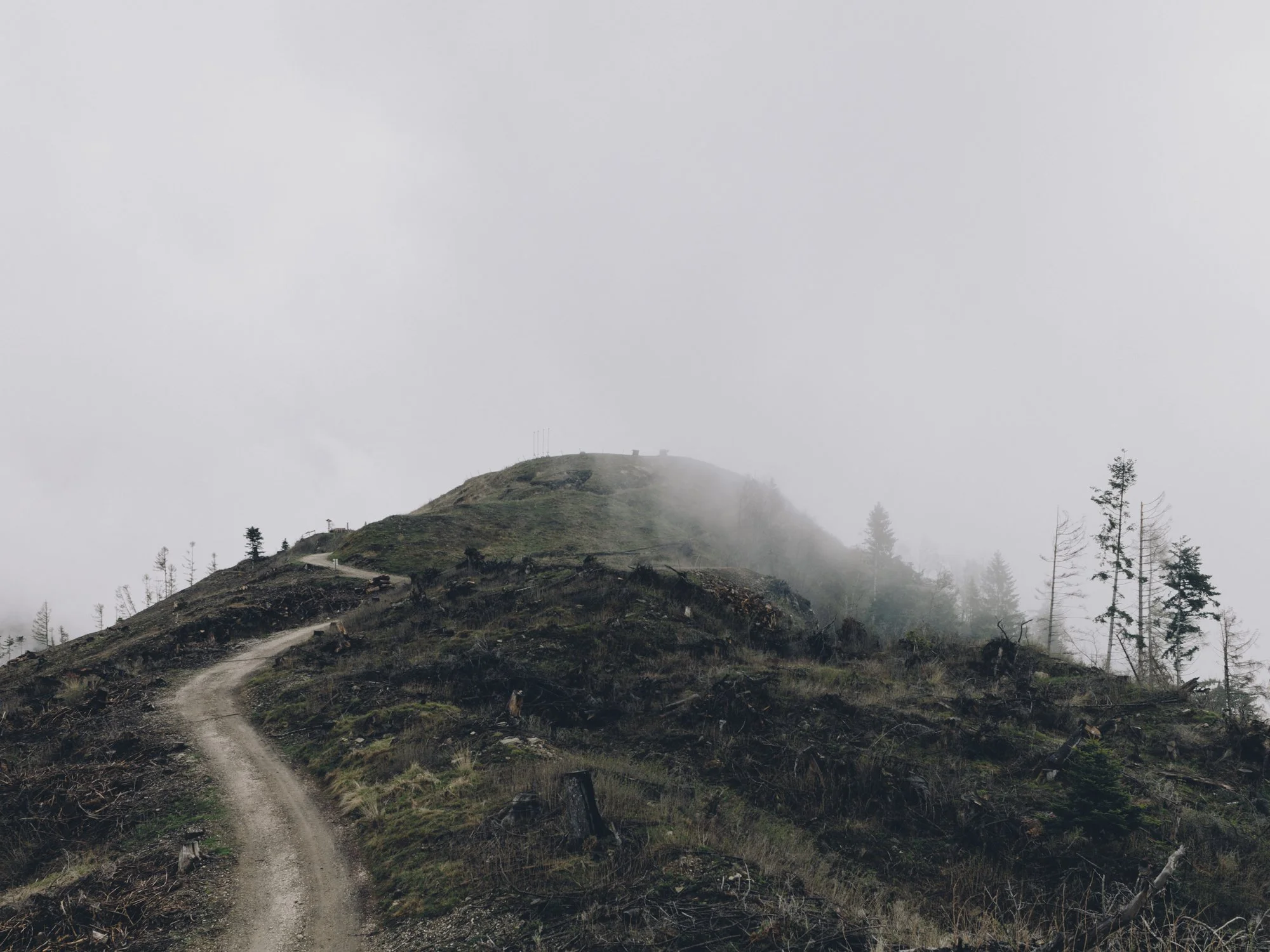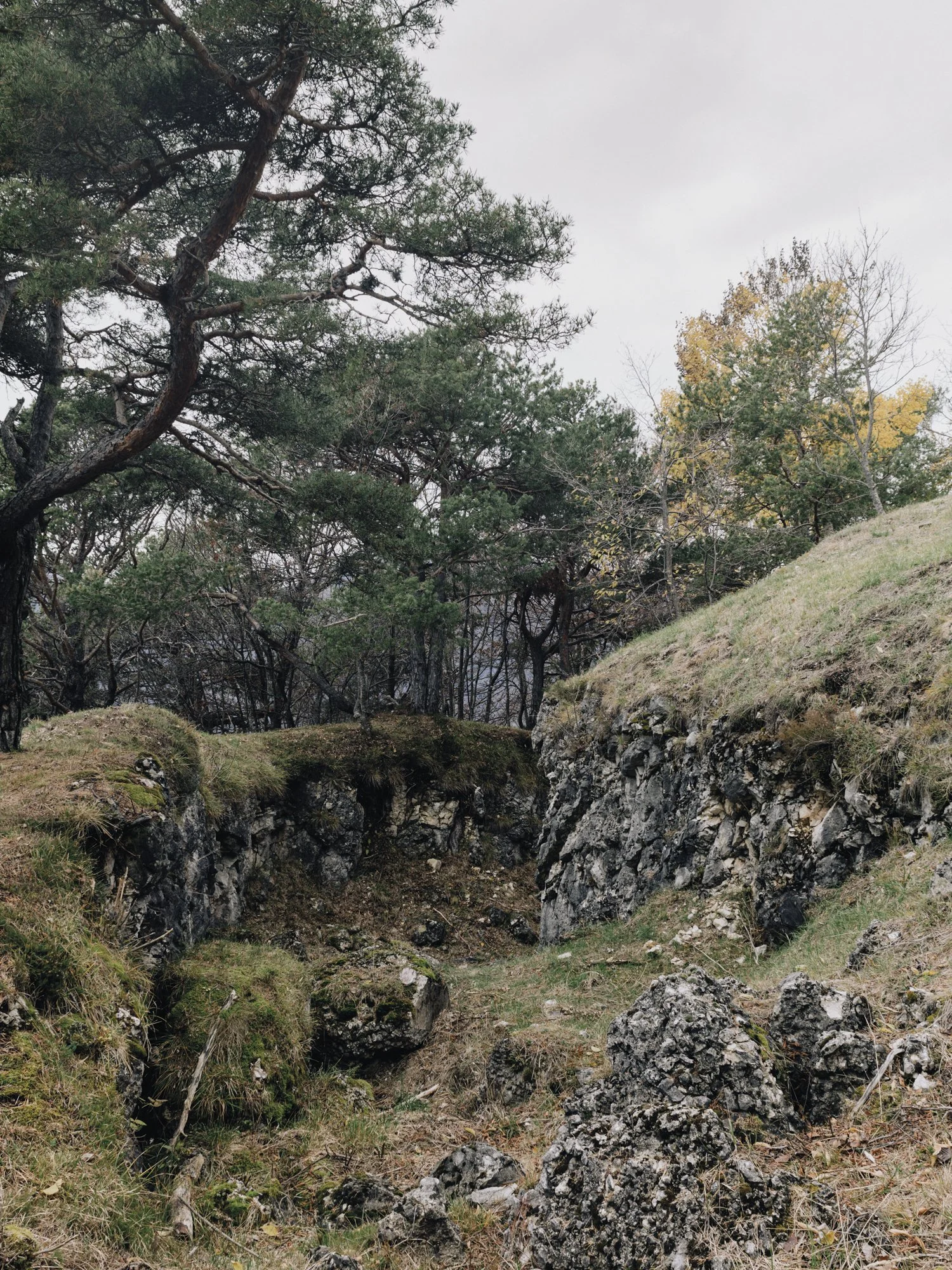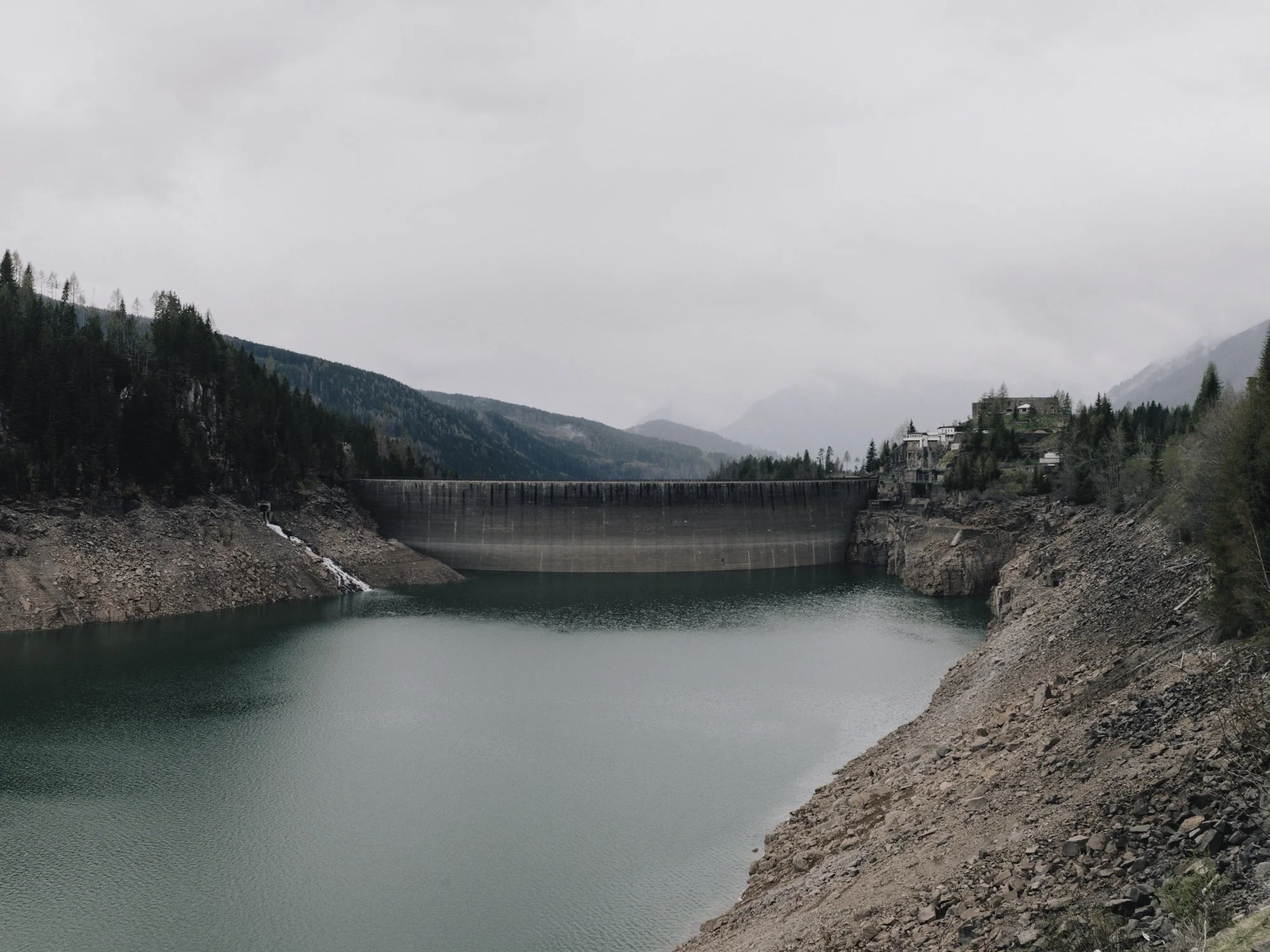
Under the grey skies that inevitably accompany snow and rain in the mountains, the walks I made to the locations in these pages were fascinating in themselves. Upon my arrival, and confronted with the remnants of these forts merging inexorably with the landscape, the need to make the work was apparent.
In late 2019, while in the final stages of A Wounded Landscape – bearing witness to the Holocaust, I started to think about the book I could make next, and whether I could perhaps embark on a follow up of sorts to my first book, The Last Stand.
I must admit that, after the previous six years’ work, the idea of something more gentle on my soul was enticing. What I eventually found was a logical continuation of the theme of memory and history set in the landscapes. In partnership with Italian architect and researcher Marco Ferrari, this work focuses on First World War mountain forts of northern Italy. The foundations of the project were rooted in an ecological perspective: these man-made forts, created more than a century ago, have become part of the fabric of the natural landscape they once defended.
Marco writes about the project: “It proposes a significant shift in the interpretation, focusing on the relation between forts and landscape with a highly transdisciplinary approach: intersecting geography with landscape archaeology, difficult heritage with natural sciences (biochemistry, geology and botany), feminism (queer and cyborg theory) with contemporary philosophy (animism, post-human and multi-specific approaches).”
This notion, intertwined with the history of the area fascinated me, leading to two years of making photographs of the forts and now the publication of this book.

The book
112pages
60 photographs
Research text
Published 2022